An Artist's Journey - Part 3, Making it (as a Principal Artist)

Article / 14 March 2022
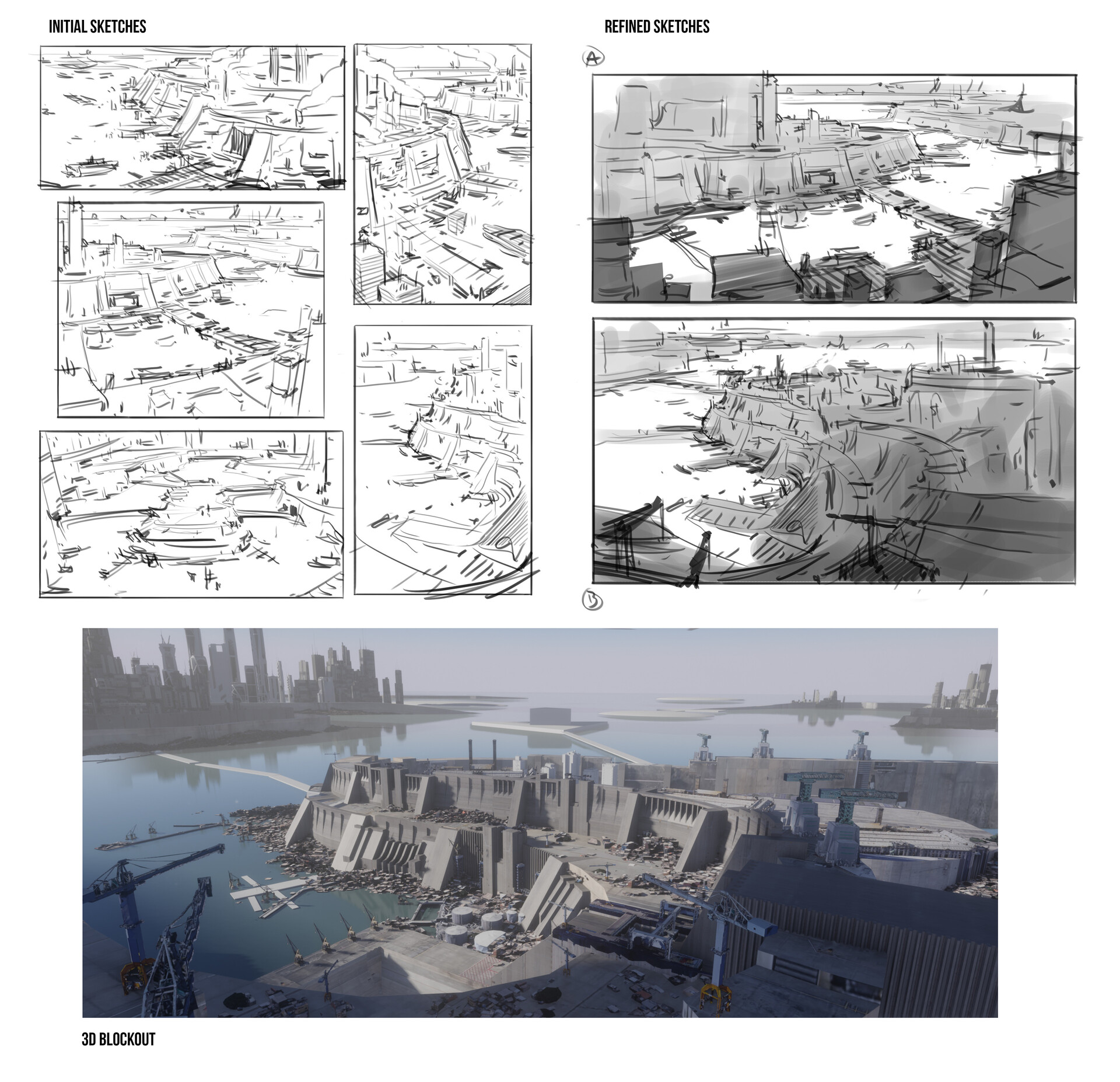
Personal artwork by Thomas Stoop.

Once an artist has clocked up several years of experience, they might tell you they’ve seen it all. However, the very best artists, even those who have achieved the status of Principal Artist, are committed to learning and development as an ongoing proposition. There are some ways though in which reaching this level marks a change in your working life. The unknown becomes less scary. You feel confident that when you’re assigned a brief, you’ll smash it, or if you do come up against a challenge, you have the communication skills, practical knowhow and carefully honed creative approach, to navigate it successfully.

As a Principal Artist, you will have attained a level of ability that makes the fundamentals a breeze, complicated design techniques a cinch. The small problems a concept artist is required to solve hour-by-hour as they intricately tie together the client’s brief with the limits of technology become second nature, freeing up space for your creative mind to innovate. That spark of new thinking, the capacity to experiment with confidence and imbue your work with real emotion, is what clients and players respond to when they see your work.

Thomas Stoop joined Atomhawk in 2016 as an Intermediate Concept Artist and has since risen to the rank of Principal Concept Artist. Before joining the studio, he had been freelancing full-time. He says, "When I started working at Atomhawk I never really had the goal to become a Principal Artist, but I did want to become a Senior. To prepare me for this I had to do a lot of deputising on different projects and get comfortable with giving feedback. After two years, I moved to the Vancouver studio and got the promotion to Senior, which over time naturally turned into Principal.”

Principal Concept Artist, Dario Jelušić, assisting Mauro Cerati with a paintover.

While Seniors are leaders within their own teams, Principals edge more towards overall project management. The Principal helps support the Art Leadership team like a buffer. When Leads or Directors fall ill or take time off, Principals have the project and management skills needed to step up and ensure projects stay on track.

Thomas explains, “The biggest difference between going from Senior to Principal compared to Junior to Senior is that you have to become more involved with leading projects, discussing new projects/timings with production and working more closely with new hires to make sure they have a smooth introduction to the studio. It’s less about the actual quality of your own work and more about making sure that others can do the work to the best of their ability.”

When asked what advice Thomas would give to Seniors hoping to become Principal Artists, he says, “Be vocal about what your goals are, Atomhawk will help you reach them.”

This is key. Principal Artists have the self-assurance to ask for what they want, for themselves, for their team and for the projects they’re overseeing. That’s a quality that develops over time, layers of experience and knowledge gradually put in place in preparation for the next challenge your career holds in store.

<- Back to Part 2 | Read Part 4 ->

Ready to join Atomhawk? Check out our job openings here.

Or if you’d rather level up your skills and get industry ready, we recommend our free e-learning course, StudioQuest, exclusively on ArtStation.

An Artist's Journey - Part 4, This is the life (of Leads and Directors)

Article / 14 March 2022
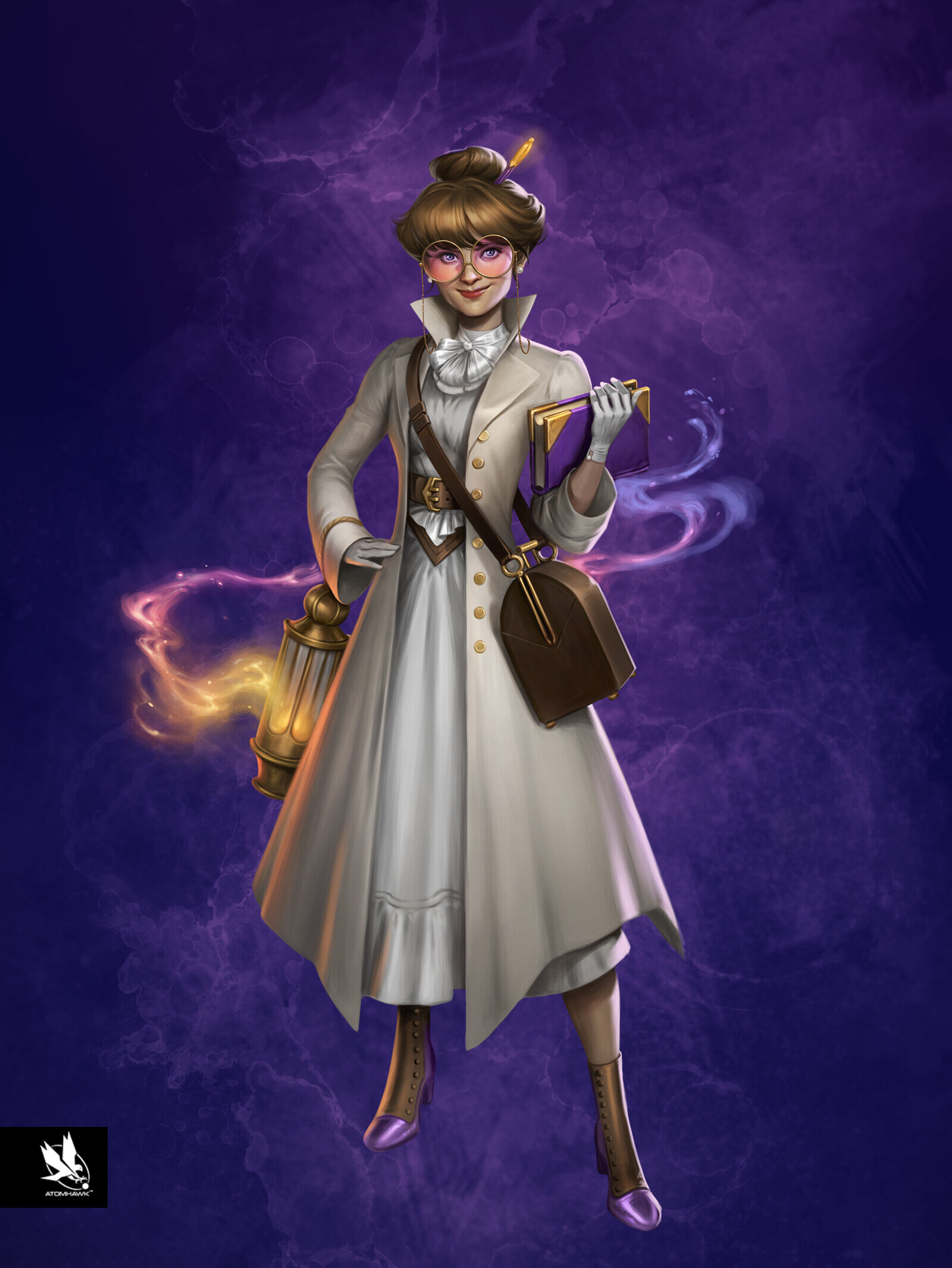
Artwork by Charlie Bowater.

Your route to the level of Lead Artist, and then potentially Art Director may be circuitous or direct but, either way, it’s a real step-change in what’s expected during your day-to-day working life. Drew Whitmore joined the company in 2016 as a Principal Artist and is now an Art Director. Before making the move overseas to Gateshead, Drew had been working as a game developer and already had Atomhawk on his radar. He says:

“My wife and I weren’t planning on moving to England, but I noticed Atomhawk was looking for a Principal/Lead. I was super interested because they made cool artwork for companies I wanted to work with (still in games), but were potentially more stable than a game developer. And they were!”

Charlie Bowater’s career trajectory at Atomhawk began not long after college. She started as a Junior 11 years ago and now works as a Lead Artist. She says:

“Atomhawk was my first professional art role. I had a lucky break when the company found me through DeviantArt. I hadn’t heard of the studio– it had just celebrated its first anniversary. I hopped on a train up to Gateshead to meet the team. The next day they offered me my first break!”

In the early days of your career there’s a rawness and freedom to work, a sense of possibility. Some artists worry that as they progress and reach seniority, the thrill of hands-on creativity may be lost. It’s certainly true that as an Art Director your relationship to the art will shift, panning outwards to encompass projects fully, opening up to take in the whole company picture, not just the one immediately in front of your face. Drew says:

“The roles of Principal, Lead, then Director are a gradient of doing more-to-less art. The higher up in the chain you get, the less artwork you do directly. Instead, you get to direct it! Sometimes spending less time on tools is a shame, but it comes with benefit of having a greater say across projects and company matters.”

Drew Whitmore briefs a new client project to the assigned artist. From StudioQuest Episode 4.

Charlie agrees, although she points out that there’s a certain differentiation between her and Drew’s respective roles of Lead Artist and Art Director:

“As Art Director, Drew has oversight of a wider range of projects than I do. Lead Artist retains a more specific focus, in my case that’s on characters.”

Reaching this level of seniority has brought about rewards the two Atomhawk leads hadn’t necessarily expected. For Charlie, watching individuals develop and push their potential has been satisfying:

“My favourite thing is seeing the team progress. Artists can be a self-critical bunch, so I try to be supportive and encouraging to the members of our team, whatever leg of the journey they’re on.”

Both Charlie and Drew found Atomhawk’s Artist Matrix helpful as they settled into their senior roles and adopted the new responsibilities assigned to them. Drew says: 

“A lot of companies say they have upward progression but give no guidance on how to move upwards. I like that the Artist Matrix gives clear goals that artists need to achieve to progress, whether that’s skilling up in a speciality or to get that extra responsibility of deputising or leading on projects.”

Charlie agrees: “It also highlights aspects of leadership roles that people may not have considered before. For example, I think two of the best bits of advice for anyone progressing into leadership would be to find a way of looking at piece of artwork from an artist’s perspective and, simultaneously, from a client perspective. And to get comfortable with giving feedback!”

<- Back to Part 3

Ready to join Atomhawk? Check out our job openings here.

Or if you’d rather level up your skills and get industry ready, we recommend our free e-learning course, StudioQuest, exclusively on ArtStation.

Trojan Horse Was a Unicorn 2022 - Under the Canopy Talk

Making Of / 08 March 2022

Watch our full talk at Trojan Horse Was a Unicorn Career Camp 2022: an overview covering the creation and production of StudioQuest - our 6 part educational series from the Atomhawk team exclusively on Artstation Learning and the IP that was created for it, know as Project Canopy. (Talk starts at 2:15).


Support for Ukraine

News / 28 February 2022

We stand in solidarity with our colleagues directly affected by what is happening in Ukraine and will continue to support them however we can through this crisis and beyond.

If you would also like to donate to the Ukraine Crisis Appeal, you can do so here. Every pound counts.


Applicant Q&A Guide - 3D Artist

General / 09 February 2022

What kind of artist would suit this role?
To excel in this role, you need strong Hard Surface modeling fundamentals and a thorough understanding of the games development pipeline from initial blockout, through high/low poly modeling to UV mapping & baking.

We are looking for someone who is able to tackle modeling an asset from a concept sketch, quickly and effectively - with a good eye for proportion and detail. The best hard surface artists have thought and iteration behind them, so just being able to put out a good looking render isn't enough, this is a modeling biased role where edgeloops, vertices and polygons matter. Someone who is truly passionate about Hard Surface modeling will be able to demonstrate cleanly built models, care and attention to each stage of the pipeline process and a workflow, which allows for iteration and feedback changes.

What should I include in my portfolio to impress?
We would need to see strong examples of hard surface modeling, examples of which include; armor, props, vehicles, weapons and mechs. We would also like to see the design iteration, workflow and wireframes as well. It's one thing to show a finely polished and rendered model but showing the 'workflow processes be it initial sketches/concepts, blockouts or wireframes really helps us see how you got to the finished product. These should be ordered and presented cleanly as part of your portfolio.

What kind of projects will I be working on?
Initially you will be working on an update to an award winning FPS, your role will cover for the duration of the project; armour, weapons, props & vehicles. Longer term projects which come into Atomhawk vary from real world to fantasy and sci-fi to post-apocalyptic themes. Anything could come into the studio that needs a hard surface specialist, so a broad knowledge of subjects is essential.

What are top 3 tips to prepare myself for the interview process?
Know your process - It's super helpful for us to know your workflow and how you approach projects, so be prepared to take us through how you go about it, how you deal with problems and how you take feedback and critique.
Know your subject - We're really looking for someone who knows their hard surface design and games development pipelines, so be prepared to talk about your processes and workflow. Who's your favourite digital artist and why? Who/what inspires you? What's your goal with hard surface modeling?
It's not all about the art - We're also looking for someone who is friendly, easy to talk to and will fit into our collaborative studio culture. So try to relax and be yourself, it will help make a good impression.

Don't forget to follow Atomhawk's Portfolio Guide and send your application in at atomhawk.com/careers.


Q&A with StudioQuest Instructors

News / 02 February 2022

Hello everyone! StudioQuest instructors Charlie Bowater, Jourdan Tuffan, and Artur Zima are excited to answer your questions about their role in making this exciting new ArtStation Learning series. For this live text-based Q&A, the instructors will be replying to questions left in the comments section of this post.

As a refresher, here are the respective topics these three talented artists covered:

This Q&A is a great opportunity to learn what it's like to work in a creative team, with an art director, and for clients. The trio is also ready with workflow tips and helpful pointers for achieving industry-level quality in your work.

If you haven't already, give StudioQuest a watch, and we'll see you here on February 8th at 10 AM Eastern. 

Announcing StudioQuest: A New ArtStation Learning Journey 🎨⚔

News / 11 January 2022

Welcome to StudioQuest, a 6-part episodic journey designed to give you a realistic insight of what it’s like to be a concept artist working in a studio. From initial client briefing and collaboration with team-mates, through feedback loops and final delivery, this series touches on a wide range of topics at all stages of the visual development pipeline.

Follow along as Senior Atomhawk Artists show you how to build a world from end to end, sharing their tips and techniques along the way. Each of the six tutorials will cover a specific part of the game development process, allowing you to build your own world with the support and guidance of the Atomhawk Senior Art Team.

Start StudioQuest for Free Today

The entire series is available for streaming on ArtStation Learning. Get started today!


Applicant Q&A Guide - Character Artist

General / 08 November 2021

What kind of artist would suit this role?
To excel in this role, you will need a strong understanding of fundamental skills such as knowledge of anatomy, character design and clothing/costume design. Ideally you should be able to communicate your thinking quickly and effectively via sketches. 

Character design often comprises of an in-depth exploration stage so being able to explore and iterate upon a design is key. A strong sense of design will allow you to problem solve to create a character that fits into any setting, world, or style. An artist suitable for this role should be able to create a high-fidelity level of finish to their work. They should be able to communicate lighting, form, materials, and textures in their final render. 

What should I include in my portfolio to impress?
We would need to see strong examples of character designs, whether they are realistic or have a stylized flair. We would love to see the entire design process for your character art. Share your initial sketches and subsequent iterations. The journey of your character design: your exploration, thinking and reasoning behind your choices are equally as important as being able to create a polished end result. Sharing each stage of our work in a presentable way is an integral part of our day-to-day process, so it’s something we are always looking for.

What kind of projects will I be working on?
Anything from real world to fantasy and sci-fi to post-apocalyptic themes. Shooters, racing games, RPG’s – anything could come into the studio that needs a character specialist, so a broad knowledge of anatomy and design is key.

What are top 3 tips to prepare myself for the interview process?
Know your process - It’s super helpful for us to know how you work and how you come up with your designs, so be prepared to take us through how you go about it.
Know your subject – We’re really looking for someone who knows their character design, so be prepared to talk about your process! Who’s your favourite designer and why? What’s your favourite style of character to design? Etc.
It’s not all about the art – We’re also looking for someone who is friendly, easy to talk to and will fit into our collaborative studio culture. So try to relax and be yourself, it will help make a good impression.

Don't forget to follow Atomhawk's Portfolio Guide and send your application in at atomhawk.com/careers.

We won an award! 🥳

News / 01 November 2021

We were honoured to receive the Develop Star Award for Best Creative Provider last week. More than anything, this acknowledgement is a credit to our incredible teams in the UK and Vancouver, and our new remote technical art team. The last two years have not been easy on anyone, but this award shows how professional and committed every artist, designer, producer and manager has been in spite of it. First and foremost, Atomhawk is a group of people who care about each other and the work we're producing as a collective for our clients and projects with the sharpest skills in the industry.

So, Hawks, this one's for you! 🏆🍾

Atomhawk - Student Week Q&A

General / 27 October 2021

Hey everyone, we're excited to be doing a Q&A with ArtStation during Student Week on behalf of Atomhawk Design. We’ll be answering questions from 10am to 11am EDT. We're happy to answer any questions you may have regarding Atomhawk Design, our current job openings, and give career/portfolio advice.

How it works: write your question in the comments section and we’ll reply during the scheduled time.

Take it away!

Gavin Manners (Senior Concept Artist)
Will Lake (Associate Art Manager)