The Rising Star Mentorship: an invaluable encounter in your career

Article / 03 April 2023

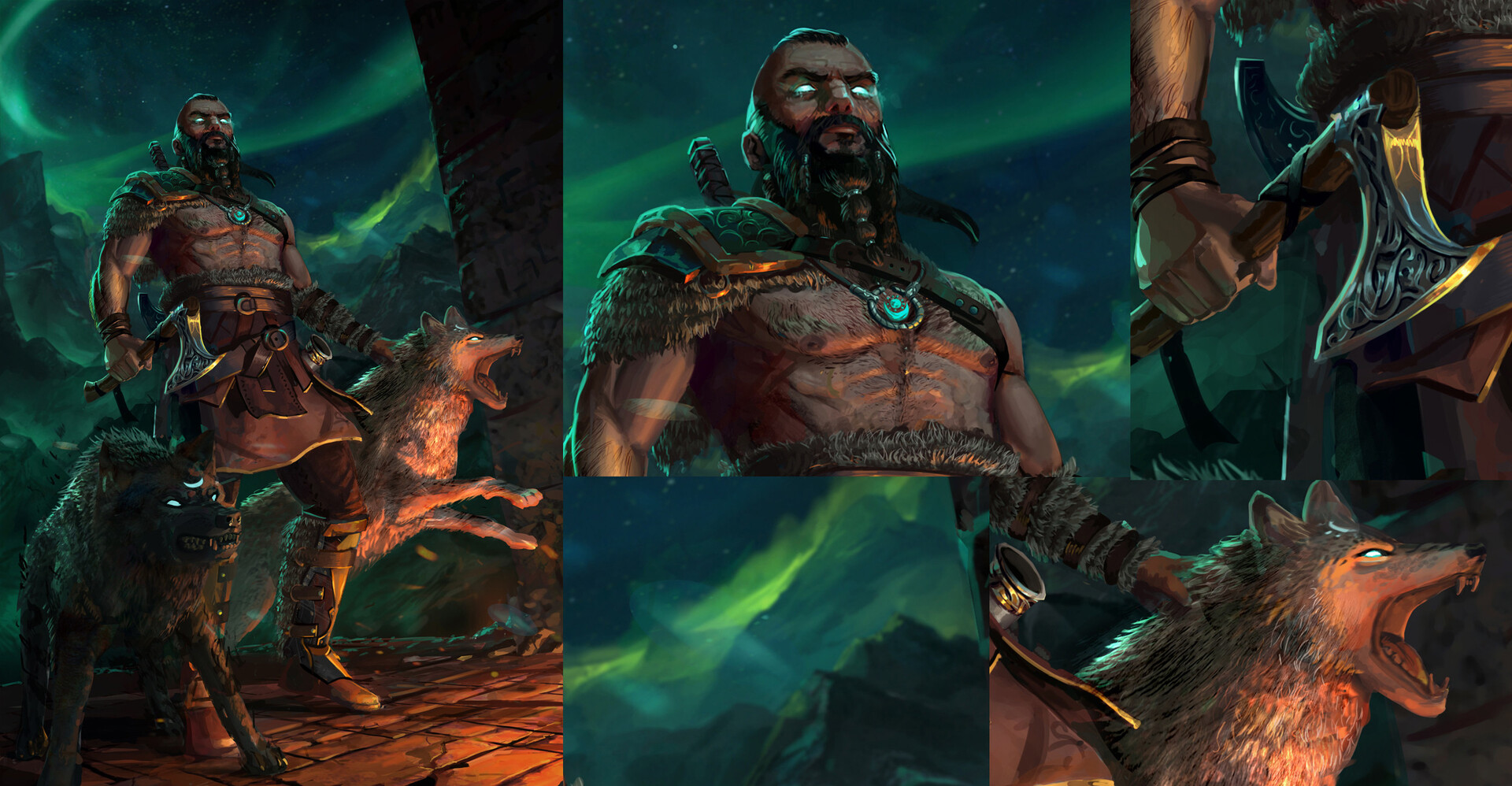
One winner of our annual Art Competition gets a prize that can’t be bought, and one that becomes more precious the more you invest in it – an Atomhawk Rising Star Mentorship.

A mentor is someone who helps you refine your skills, make better decisions, and gain new perspective on your life and career. A good mentor’s experience will guide and inspire your work now, and your career.

Last year’s Forgotten Creation competition saw Charlotte Kügler win the Rising Star Mentorship. The judges were particularly impressed with the storytelling, care, and detail Charlotte invested in her entry illustration. She was the ideal candidate to take advantage of a mentorship with an Atomhawk artist. As well as the mentorship, Charlotte received a Wacom Cintiq 22, courtesy of Wacom and Escape Technology. Other prizes included store credit from art education experts 3dtotal and Proko.

We had a chat with Charlotte about her experience with the mentorship, and she kindly took us through the detailed process of creating her winning entry. 

Check out the full interview now at Atomhawk Resources

The Atomhawk Art Competition will be back this year in July! If you would like to be notified of this year's theme 24 hours before everyone else, join our Art Competition Early Access mailing list.

An Artist's Journey - Part 1, In the beginning (of your internship)

Article / 14 March 2022
Dennis van Kessel's Awesome Image from his Atomhawk Internship.

At Atomhawk, we’ve identified lots of brilliant juniors over the years and worked with them to build the skills, mindset and experience they need to grow as standout artists. Here, we’re giving you a taste of what it’s like to be a concept art intern at Atomhawk, as we nurture your talent and set you out on the journey to become an established concept artist.

The lines around what an internship entails have become blurred in recent years, with some unscrupulous creative organisations exploiting eager, young talent hoping for a foot in the door. The core purpose of an internship is to build a bridge between self-taught skills or tertiary education and professional industry work. The metamorphosis from enthusiastic young artist to industry-ready professional requires a mental shift that encompasses new ways of thinking about creativity, a new work discipline, and new processes.  An internship should provide an environment in which you can develop all three. 

So, what can you expect as an intern at Atomhawk? Our interns never contribute to active projects, and nor should they. However, you can expect to either assist artists on small tasks or to shadow, where you observe someone in their role to better understand how they do their job. As an Atomhawk intern, the first task you’ll be assigned is the ‘Awesome Image’ project. This involves writing your own brief to create any image you want to. This gives you an opportunity to share your personality, who you are as an artist, and your specific strengths, but also to push yourself. By writing your own brief, you can make sure your capabilities are both showcased and stretched. You’ll work closely with a more senior artist who will monitor your progress, providing feedback three or four times a day.

Working on a training artwork as part of Atomhawk's Training and Development program.

Méabh Deloughry, a former intern who now has a role as a Junior Concept Artist describes the experience of completing the ‘Awesome Image’ brief:

“The brief proved invaluable to me as I learnt how to work with constructive criticism, translating it into artwork amends. There is a work efficiency here that you pick up very quickly, which makes everyone gel, constantly strengthening teamwork skills, and making us all work like a well-oiled machine.”

The challenges at Atomhawk vary from project to project. Some require a lot of stylisation and some demand more realistic results, which is great for learning different ways to approach projects. Our artists need to be versatile and use the full extent of their skills, sometimes pivoting from one skillset to another in an instant.

Dennis van Kessel, a former Atomhawk intern who also now works with us as an Intermediate Concept Artist, says:

“Receiving constructive feedback was incredibly valuable to help improve my illustration and fundamental skills, for example, for colour iterations, and to improve my approach when going from greyscale to colour.”

We’ve had the privilege to invite many interns through our doors during ten plus years of Atomhawk, and have gone on to hire many in full-time roles. Sharing our collective knowledge with future concept artists and providing a space where potential can be fulfilled is central to who we are as a studio.

Read Part 2 ->

Ready to join Atomhawk? Check out our job openings here.

To level up your skills and get you industry ready, we recommend our free e-learning course, StudioQuest, exclusively on ArtStation.

An Artist's Journey - Part 2, Moving up (from junior to senior)

Article / 14 March 2022
Artwork by Quentin Castel.

Stepping up to become a Senior Artist is significant. You’re thrust into teamwork, communicating with producers, digesting client feedback and witnessing the creation of games from the inside. Some parts of the job may surprise you and, if you’re from a freelance, tertiary education or self-taught background, you may not have a grounding in the realities of working in a professional studio. 

In the niche field of concept art, Atomhawk is unusual in that so many people of the same discipline operate under one roof, each with their own unique life experiences and skills. There’s always the opportunity to grow, both through the projects you’re assigned, and by sharing creative influence and practical skills.

Developing talent is a core value at Atomhawk. Our Artist Matrix provides a clear roadmap of how our artists can progress their careers. Twice yearly appraisals open up opportunities for leads and directors to discuss individual goals and create clear plans of how to achieve them. Quentin Castel is a Senior Artist who joined Atomhawk in 2017 as a junior. He says:

“I graduated from an art school in France. After that, I spent a year doing freelance gigs. While searching for an in-house job, the opportunity at Atomhawk UK came up. I was happy to move abroad as I knew it would be a very good personal experience.”

Discussing career pathways with the Atomhawk Artist Matrix.

The Artist Matrix is a growing and iterative development system which adapts to the people in our team and their needs. Currently, it is split into four key areas: Expertise & Experience, Problem Solving, Influence & Impact, and Communication. An intermediate artist is required to have more initiative than a junior, an intimate understanding of the workflow and to be able to communicate their decision-making process effectively.

Having established himself in a more junior position within Atomhawk, Quentin was asked to step up on a project as a deputy, someone who can assist the project leads to ensure the team continues to function well if a colleague is away or challenges arise. He had previously worked on this particular project for several months and taking on the additional responsibility helped him gain team management experience, something Senior Artists must have.

Senior Artists are highly reliable team members who have at least one area of expertise, and who can deliver feedback on projects when required. Additionally, they are able to navigate project documentation, represent the project to the client and identify areas of innovation and training within their teams. At this stage, Seniors can progress down a specialist art route, or they will take on more leadership duties within their team, which in turn helps them to develop the skills and experience required to move into the managerial roles of Principal, Lead and Director.

Markus Biegholdt, Senior Concept Artist, optimises his workflow by using photogrammetry and VR!

Quentin believes that even as you move up into the Senior level, it’s a good idea to continue to invest in your core art skills:

 “It’s about always getting better at the fundamentals,” he says, “And to become faster too. I had to learn how to find interest in any part of the job. I think the key is to be positive about each part of the projects you work on. I really struggled with that, for a long time.”

His advice to Juniors coming through the ranks now is clear: “I would practice character drawing way more than what I was doing back then!”

<-Back to Part 1 | Read Part 3 ->

Ready to join Atomhawk? Check out our job openings here.

To level up your skills and get you industry ready, we recommend our free e-learning course, StudioQuest, exclusively on ArtStation.

An Artist's Journey - Part 3, Making it (as a Principal Artist)

Article / 14 March 2022
Personal artwork by Thomas Stoop.

Once an artist has clocked up several years of experience, they might tell you they’ve seen it all. However, the very best artists, even those who have achieved the status of Principal Artist, are committed to learning and development as an ongoing proposition. There are some ways though in which reaching this level marks a change in your working life. The unknown becomes less scary. You feel confident that when you’re assigned a brief, you’ll smash it, or if you do come up against a challenge, you have the communication skills, practical knowhow and carefully honed creative approach, to navigate it successfully.

As a Principal Artist, you will have attained a level of ability that makes the fundamentals a breeze, complicated design techniques a cinch. The small problems a concept artist is required to solve hour-by-hour as they intricately tie together the client’s brief with the limits of technology become second nature, freeing up space for your creative mind to innovate. That spark of new thinking, the capacity to experiment with confidence and imbue your work with real emotion, is what clients and players respond to when they see your work.

Thomas Stoop joined Atomhawk in 2016 as an Intermediate Concept Artist and has since risen to the rank of Principal Concept Artist. Before joining the studio, he had been freelancing full-time. He says, "When I started working at Atomhawk I never really had the goal to become a Principal Artist, but I did want to become a Senior. To prepare me for this I had to do a lot of deputising on different projects and get comfortable with giving feedback. After two years, I moved to the Vancouver studio and got the promotion to Senior, which over time naturally turned into Principal.”

Principal Concept Artist, Dario Jelušić, assisting Mauro Cerati with a paintover.

While Seniors are leaders within their own teams, Principals edge more towards overall project management. The Principal helps support the Art Leadership team like a buffer. When Leads or Directors fall ill or take time off, Principals have the project and management skills needed to step up and ensure projects stay on track.

Thomas explains, “The biggest difference between going from Senior to Principal compared to Junior to Senior is that you have to become more involved with leading projects, discussing new projects/timings with production and working more closely with new hires to make sure they have a smooth introduction to the studio. It’s less about the actual quality of your own work and more about making sure that others can do the work to the best of their ability.”

When asked what advice Thomas would give to Seniors hoping to become Principal Artists, he says, “Be vocal about what your goals are, Atomhawk will help you reach them.”

This is key. Principal Artists have the self-assurance to ask for what they want, for themselves, for their team and for the projects they’re overseeing. That’s a quality that develops over time, layers of experience and knowledge gradually put in place in preparation for the next challenge your career holds in store.

<- Back to Part 2 | Read Part 4 ->

Ready to join Atomhawk? Check out our job openings here.

Or if you’d rather level up your skills and get industry ready, we recommend our free e-learning course, StudioQuest, exclusively on ArtStation.

An Artist's Journey - Part 4, This is the life (of Leads and Directors)

Article / 14 March 2022
Artwork by Charlie Bowater.

Your route to the level of Lead Artist, and then potentially Art Director may be circuitous or direct but, either way, it’s a real step-change in what’s expected during your day-to-day working life. Drew Whitmore joined the company in 2016 as a Principal Artist and is now an Art Director. Before making the move overseas to Gateshead, Drew had been working as a game developer and already had Atomhawk on his radar. He says:

“My wife and I weren’t planning on moving to England, but I noticed Atomhawk was looking for a Principal/Lead. I was super interested because they made cool artwork for companies I wanted to work with (still in games), but were potentially more stable than a game developer. And they were!”

Charlie Bowater’s career trajectory at Atomhawk began not long after college. She started as a Junior 11 years ago and now works as a Lead Artist. She says:

“Atomhawk was my first professional art role. I had a lucky break when the company found me through DeviantArt. I hadn’t heard of the studio– it had just celebrated its first anniversary. I hopped on a train up to Gateshead to meet the team. The next day they offered me my first break!”

In the early days of your career there’s a rawness and freedom to work, a sense of possibility. Some artists worry that as they progress and reach seniority, the thrill of hands-on creativity may be lost. It’s certainly true that as an Art Director your relationship to the art will shift, panning outwards to encompass projects fully, opening up to take in the whole company picture, not just the one immediately in front of your face. Drew says:

“The roles of Principal, Lead, then Director are a gradient of doing more-to-less art. The higher up in the chain you get, the less artwork you do directly. Instead, you get to direct it! Sometimes spending less time on tools is a shame, but it comes with benefit of having a greater say across projects and company matters.”

Drew Whitmore briefs a new client project to the assigned artist. From StudioQuest Episode 4.

Charlie agrees, although she points out that there’s a certain differentiation between her and Drew’s respective roles of Lead Artist and Art Director:

“As Art Director, Drew has oversight of a wider range of projects than I do. Lead Artist retains a more specific focus, in my case that’s on characters.”

Reaching this level of seniority has brought about rewards the two Atomhawk leads hadn’t necessarily expected. For Charlie, watching individuals develop and push their potential has been satisfying:

“My favourite thing is seeing the team progress. Artists can be a self-critical bunch, so I try to be supportive and encouraging to the members of our team, whatever leg of the journey they’re on.”

Both Charlie and Drew found Atomhawk’s Artist Matrix helpful as they settled into their senior roles and adopted the new responsibilities assigned to them. Drew says: 

“A lot of companies say they have upward progression but give no guidance on how to move upwards. I like that the Artist Matrix gives clear goals that artists need to achieve to progress, whether that’s skilling up in a speciality or to get that extra responsibility of deputising or leading on projects.”

Charlie agrees: “It also highlights aspects of leadership roles that people may not have considered before. For example, I think two of the best bits of advice for anyone progressing into leadership would be to find a way of looking at piece of artwork from an artist’s perspective and, simultaneously, from a client perspective. And to get comfortable with giving feedback!”

<- Back to Part 3

Ready to join Atomhawk? Check out our job openings here.

Or if you’d rather level up your skills and get industry ready, we recommend our free e-learning course, StudioQuest, exclusively on ArtStation.

Atomhawk Q&A: Social media, internships and getting noticed

Article / 29 September 2021

This Q&A was originally posted in part at http://atomhawk.com in March 2019.

Internal project dynamic shot by Matthias Kapuvari


Because of all the information overload on social media and art-share websites, it's hard to stand out from the 'crowd'. What makes you want to double-check/linger on someone's art page when you're on your daily ArtStation scroll?

Standing out in the crowd is something all of us artists have had trouble facing at some point or another. What makes me stop and linger on someone’s work is the way they use shape language and value structures in a painting. Use lighting and values to draw the eye along shapes to make statements with your pieces that will catch a viewer’s eye.

Look at old masters like John Berkey and Frank Frazetta; shape language and shape design are an important skill to invest in as a concept artist and will make it easier to catch someone’s attention on first glance. – Damian Audino, Senior Concept Artist


How can I build my personal brand as an artist on social media?

Social media is a great way to get involved in the community and build a following and client base. It can be a slow start; building a following is an exponential process so don’t be discouraged if you don’t get thousands of followers right away. Here are some ways to get noticed on social media:

  • Have conversations: follow your favourite artists and post positive comments on their artwork, check the comments for other like-minded people to follow, eventually the algorithm will catch on to your interests and provide similar creators to engage with

  • Use trending hashtags: using too many hashtags on your posts won’t really help your growth, but if you’re seeing a lot of buzz around certain hashtags (like the popular #PortfolioDay, #VisibleWomen or #DrawingWhileBlack) and they’re relevant to you and your work, get on that while it’s hot!

  • Post your work, even your sketches: it can be scary to post unfinished work, but it’s something people love to see! It also helps hype your finished image as you bring followers along your journey of creating art

  • Share your process: one of the most powerful tools in our connected world is skill sharing. Tutorials are hugely popular and giving back to fellow artists helps build trust among your community

  • Be exemplary: social media favours informal speech, so don't overthink your words and just be yourself, but remember to always be kind, especially to aspiring or non-artists who become your fans

On a more serious note: it’s key to say that social media can unfortunately harbour trolls and bad-mannered people. If you or your friends experience harassment, it's a good habit to blocking and reporting them. Sometimes responding to trolls can make a situation worse, so avoid communicating with them if you can. There's a lot of great information about managing trolls these days, so confide with people you trust or a professional for support and advice; don't feel like you have to go through it alone. – Justine Colla, Marketing Manager


I am currently a junior Concept Artist and wish to someday reach the Atomhawk quality benchmark, how does your internship program work, and is it paid? 

Our internships are offered to promising young artists, students and graduates looking to get their foot in the industry. The ultimate aim of the program is for the applicant to progress into a full-time Junior position at the end the internship. The program starts off by focusing on creating an Atomhawk-quality image with close guidance from the art team. The image is then revisited and reworked in a completely new way, the brief and process will be set by our team. Finally, shadowing tasks and further tailored training will test what you've learned and apply it to similar time constraints as our art team. Read more about our internship here.

Applicants need to demonstrate a portfolio which shows experience in art fundamentals (light, form, composition, perspective, etc) and a sense of design thinking, storytelling and personality. Internships are granted on a case-by-case basis and are voluntary, with recoverable travels and expenses up to £500 per month. – Tim Wilson, Managing Director

Check out our available positions at http://atomhawk.com/careers 


What is the best way for artists to get noticed and get a foot in the industry?

An impressive portfolio will always be the best way to get a foot in the industry. We recommend updating your portfolio regularly and only including your best pieces. Look at the work that your favourite studios are producing and create a couple of images that would fit well with their style. ArtStation is the standard for portfolio websites these days and a great place to get involved with the art community.

Network is equally important to a good portfolio and try to do it as much as you can. If there are no art communities in your local area, we recommend getting involved in Discord servers, Facebook groups and online competitions like 3dtotal and Atomhawk's own art competition we hold every July.

And of course, keep practicing! – Darren Yeomans, Studio Director


Do you have any questions for Atomhawk artists? Leave them in the comments and we will do our best to answer them in a future Q&A!

Atomhawk Q&A: Inspiration, process and UI art

Article / 15 June 2021

This Q&A was originally posted in part at http://atomhawk.com in March 2019.

Internal environment thumbnails by Thomas Stoop


Where do you draw inspiration for your artworks? And how important is using reference?

As a character concept artist, my major inspiration comes from fashion design and movies. I think it’s important to get inspired by all different kinds of media like music, comic books, fine art in galleries and travel, whether is to a local park or on a hike overseas. Finding your own sources of interest and inspiration outside of video games makes every artist’s work unique and personal.

Although it can feel time consuming to put together, having a good reference board can save you a lot of time in the long run. I find that by spending ample time researching and analysing the subject and theme for each of my artworks, I also get to educate myself and enlarge my visual memory which helps me make the best possible work out of my ideas. – Vlada Hladkova, Principal Concept Artist


How hard is it to work with different styles for so many different projects?

Working with multiple different styles definitely presents a challenge and can occasionally lead to tonal whiplash is you are moving from something dark, realistic and gritty directly to something sweet and cartoony!

In my experience, being able to make that switch takes practice and does get easier with time. I find it helps to have slightly different workflows for each style and to always have the references of the style you need up at all times. – Drew Whitmore, Art Director


I’m interested in exploring UI art more. Where’s a good place for me to start to learn more about the medium?

If you want to learn more about UI art, I recommend looking around at UI artists online and seeing what kind of work catches your eye and gets you excited about the medium. There are tons of talented artists on ArtStation who do more than just illustration, and it’s where I like to browse for inspiration. Pinterest also has a fantastic range of content, as well as more dedicated sites like HUDS+GUIS.

For those who want to learn how to create UI art, I recommend looking up tutorials on YouTube, you’d be surprised how many amazing tutorials are on there for free! There are also a few paid courses on LearnSquared for UI that are designed to take you from a beginner to a professional. - Mike Howie, Senior UI/UX Designer


Does the process of creating concept art vary from video games to film work?

The process varies considerably depending on what the client wants! But for our average project a rough process is typically:

  • Briefing and referencing: An artist will get to grips with the requirements of the project and go over references provided and search out others if necessary.

  • Sketching: Typically most projects (though not all) will start with rough thumbnails to generate ideas for design or composition etc.

  • Sketching / Refining: We'll start to move forward with whichever elements from the thumbnails are working best. We may also implement 3D depending on requirements and the individual artist’s process.

  • Refining: With a solid direction we can start working up the design by refining it and adding detail etc.

  • Colour: We take the final design through to a finished colour piece.

Charlie Bowater, Lead Artist


Do you have any questions for Atomhawk artists? Leave them in the comments and we will do our best to answer them in a future Q&A!